

For the First Time in History, Enset Is Harvested in Kenya

Shannon Fernando-Rubera stands with arms crossed wearing a green top
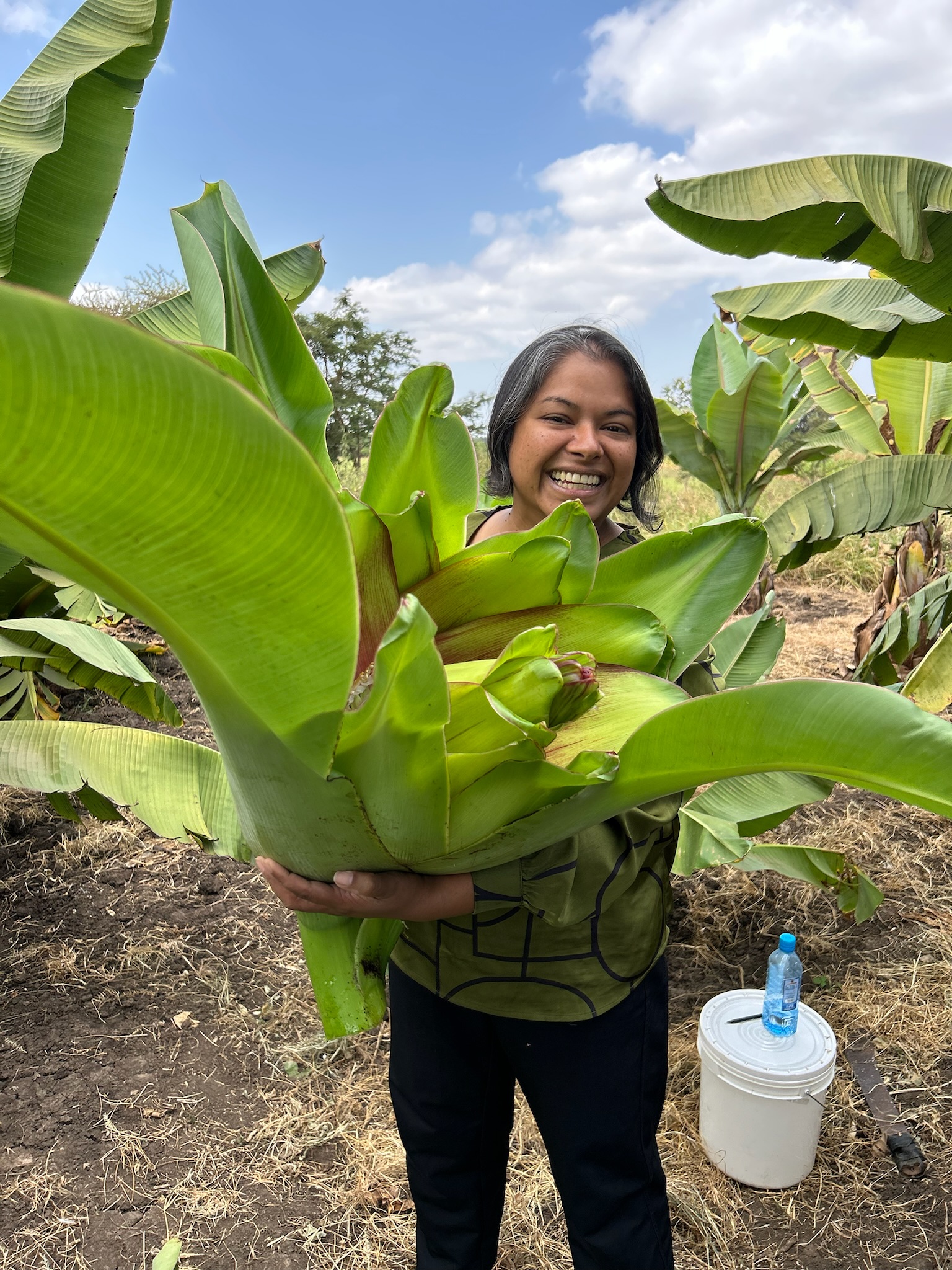
Shannon Fernando-Rubera holds the first Enset plant to be harvested in Kenya
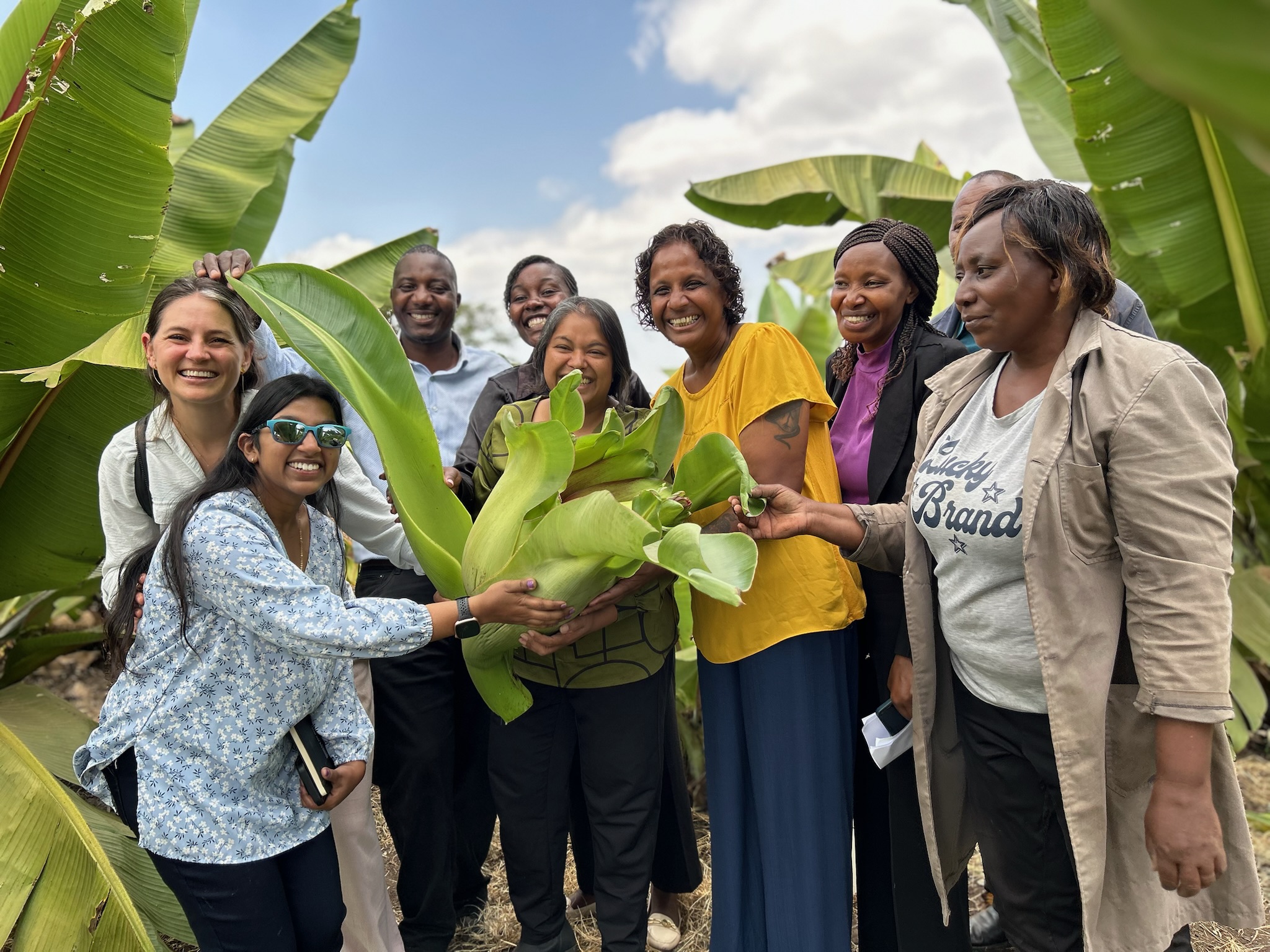
The first harvest of Enset
A four-year, two-nation partnership led by Alabaster International proves Ethiopia’s “tree against hunger” can grow and feed people beyond its borders.
Enset, a banana-like plant sometimes called Ethiopia's "tree against hunger," has fed millions of Ethiopians for generations. Its water-storing trunk allows it to survive prolonged drought, making it a year-round buffer crop when other food fails. Until this project, cultivated enset for human consumption had never existed in Kenya.
The harvested plant — a Checho variety, the "cooking type" whose underground corm is boiled and eaten like a potato — yielded roughly 10–15 kilograms of food. The harvest is now undergoing full nutritional analysis to confirm food safety for the first enset grown outside Ethiopia. Nothing goes to waste: the leaves feed livestock, and the trunk fiber is being sent to women artisans in Letoire, Kenya — members of the country's first-ever Enset Ambassador groups — for craft production and income.
The first photograph taken that day shows the harvested plant held entirely by Kenyan hands — field workers, the JKUAT team, and Girl Child Network staff.
"We made the first cut as a team, and then we stepped out of the photo. This has always been about African collaboration and local hands. Our Ethiopian partners were on a video call watching it happen — four years of trust between two nations, coming out of the ground," said Shannon Fernando-Rubera, co-founder and CEO of Alabaster International.
The milestone caps a research and diplomacy effort that began in 2022: negotiating enset's first authorized transfer out of Ethiopia, clearing Kenyan customs and agricultural authorities, planting the pilot site in November 2023, training Kenyan farmers, and developing a tissue-culture protocol for mass propagation — a protocol Alabaster and partners have shared back with Ethiopia. Under the partnership's benefit agreement, Ethiopia is also receiving new field trials in hotter regions, an enset processing site that cuts processing time from eight hours to twenty minutes, two women-owned enset enterprises, and the EnsetAI mobile app, now used by more than 350 farmers.
Alabaster’s Enset program currently reaches more than 10,000 farmers per year across Kenya and Ethiopia, most of them women. With a complete plant life cycle now proven, Alabaster is moving from proof of concept to scale through its new Enset Ambassador Food Sovereignty Program, which trains female smallholder farmers to cultivate enset at home and teach other communities. A single enset nursery — $5,000 to establish and $500 per month to maintain — supplies seedlings to roughly 1,000 households, about 5,000 people.
"We've proven enset can cross borders, grow in drought-prone land, and be embraced as food. All made possible by the generosity of Ethiopia and the incredible leadership of Arba Minch University and the Ethiopian Biodiversity Institute. The next year is about doubling our reach — more seedlings, more trained ambassadors, more harvests in more communities," said Fernando-Rubera.
About Alabaster International: Alabaster International is a Los Angeles-based nonprofit working alongside communities in South Sudan, Ethiopia, Kenya, and Sri Lanka on education, food security, and community-led development. Alabaster is a Clinton Global Initiative Commitment Maker (2024 and 2025) and partners with Direct Relief. Learn more at alabasterinternational.org.
Daniel Portnoy
Portnoy Media
+1 626-487-9822
email us here
EnsetAI Carbon Agroforestry Program
Legal Disclaimer:
EIN Presswire provides this news content "as is" without warranty of any kind. We do not accept any responsibility or liability for the accuracy, content, images, videos, licenses, completeness, legality, or reliability of the information contained in this article. If you have any complaints or copyright issues related to this article, kindly contact the author above.
